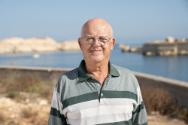
Oral history of the Malta Dockyard: Joe Baldacchino
Interviewee
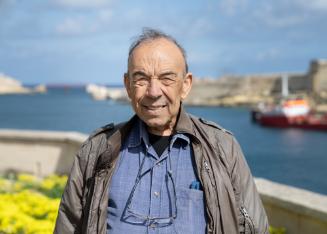
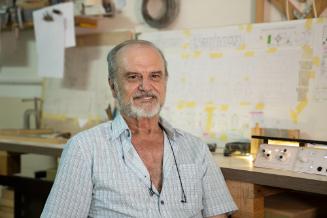
Joe Baldacchino
Maltese, born 1950
Interviewed by
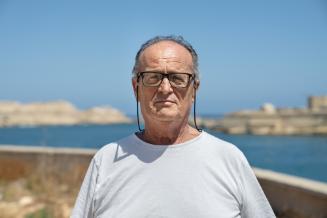
Joe Meli
Maltese, born 1953
Date6 October 2021
Classification(s)
Object TypeOral history
LanguageMaltese
Extent1 digital audio recording (WAV)
Registration NumberMMM.AV0077
DescriptionThis recorded interview was made as part of the Malta Dockyard Oral History project by the Digitisation Unit, Heritage Malta, under the direction of Joe Meli. Joe Baldacchino was awarded an apprenticeship in 1967 and fondly remembers his job and products as a Patternmaker from which trade he passed on to being a steel worker before changing to clerical work, mainly as a recorder. Joe ended his career in 2003 with an early retirement scheme.Transcript / Summary
(This summary is a work in progress. Timings are approximate.)
Special CollectionFamily and Social Life-Other family working in the yard
(00:30) He sat for the dockyard exam in 1966 where he passed but ranked 116 and at the time only 105 people were accepted into the dockyard. He re-sat for the exam after a year and was then accepted as an apprentice in the dockyard. His father was against him joining the dockyard, as he knew the dangers such a job brings since his father worked there and his father’s cousin had died in the dockyard at a very young age.
Education-Apprenticeship process
(02:15) Started in the training centre and Joe mentions all his lecturers at the time. His first year was interesting to him as there he learned a lot of different skills and techniques using different mediums. He had also fulfilled part of his dream of working with wood. Bench fitting was very interesting to him when they were given a half-an-inch (nofs pulzier) thick plate, cutting it, filing it to the point to an almost glass finishing, and measured using a micrometre; he also worked on the lathe (torn), learning also how to use the milling and shaping machines.
On completing his first year, they were split in groups of six and were given a project, where they had to do a hand-powered drilling machine. The other groups made a shaping machine, a wooden catamaran, and a fountain-like structure with moving lights.
(07:15) Due to his good result in the dockyard examination, he was able to choose the trade he wanted, his father was telling him to choose wisely due to the dangers each trade had. In the beginning, he chose to be a fitter, but after seeing the job of a patternmaker, he was fascinated by it and went on to choose that trade. He wrote a letter saying he wishes to change trades and it was accepted.
(09:00) They were three patternmaker apprentices: himself, Charles Zammit, and Francis Vella, and were sent to the boathouse. At that time, the dockyard was working on a shift basis. Since the apprentices could only work on the day shift, they alternated between two chargemen, one was Joseph Martin and the other was Nardu Agius. He was assigned to his instructors, one was John Zammit and the other was Censu Camilleri. Both were very serious and he learned a lot from them.
(11:30) He mentioned his experience, when they worked on stern tube and pintle bushes. Since he was still young and flexible, they were able to work in small spaces, since these were round bushes of about 20 feet long. They had to go into the bush to work and were supported from their armpits. Whatever the weather conditions, they had to wear boiler suits, due to the environment they worked in.
(13:00) Sometimes they had to do the work on the bushes when the ship was afloat, which made it very difficult. Working near the propeller while having to stay on a barge since the vessel was afloat, and the working space was not stable. If something fell, it ended up in the in the sea. There was also the risk for them falling in the sea as well.
Safety-Health issues (noise, risks)
(14:00) He also went onboard, with Johnny Zammit, removing insulation (made of asbestos) from pipes. Since he suffered from hay fever, he was luckily taken off that job as it was affecting him badly.
Education-Interesting training and skills
(15:30) With Censu Camilleri, he learned new working techniques such as making a shuttle valve (a valve used in systems that worked with steam and air) - Censu showed him the technique of measuring, using very thin wire (fildiferru) to calculate the thickness because the inside of it was made of a complicated system which was very small to see.
(16:30) He remembers the patternmakers during his time-Pawlu Cassar & Tony Grixti: rubber for O-rings which were manufactured on the lathe (torn), making a faceplate, then using a knife to cut.
- Guzeppi Formosa-an instructor & member of the MUSEUM
- Speditu & Guzeppi Debono
- Patist Zahra
- Saver Aquilina-lectures to prepare them for the city & guilds
- Mikiel Schriha
- Rikardu u Giuzeppi Camilleri tal Mosta
- Gianni Lija, Cikku Cachia, Gerome Mintoff & Salvu Chetcuti-these were Joiners working with the patternmakers
(19:15) Saver Aquilina - used to give them lectures on patternmaking technology, even though he was more practical than technical, hence he made use of various books. The three of them (which he mentions in the beginning) sat for the exam, where to his delight, he got a distinction, meaning he was able to decrease his apprenticeship by six months, which met getting the journeyman’s pay earlier - which made it easier for him to get married.
(20:15) When they were apprentices, they worked a lot on Naval Ships. He remembers the apprentices that entered the yard after him, like Mario Frendo, Joe Meli and Maurice Gauci Grech. Maurice came to the patternshop a bit later, because he substituted another apprentice John Spiteri who resigned from apprentice, as he had the option to go and work in a Bank, something that his father wanted him to do as he considered working in the dockyard as a dangerous job. Unfortunately, John Spiteri was killed during a bank robbery at Mgarr.
(23:30) Projects-During the construction of Nos 6 and 7 docks, explosives (furnelli) were being used during the work and very near to the boathouse, the workshop that Joe and his colleagues used to work in. There were no pre-warnings of these explosions, and all of a sudden, they would hear the sound and rocks falling on the steel shed. They protested and a small siren (balomba) was installed to warn them so they would leave their work place and go near the main office until they could return back.
(25:15) Project-He remembers a model during the design of No.6 dock-showing the sea surface with Perspex and three versions of the dock position, using plywood, as they did not know whether they would remove the side of the Parlatorio Wharf or keep it the same, just dig. A model tanker was also made to see how it would enter and exit the dock.
(26:15) Project-He was involved in the construction of a mock-up of the lamp posts for Castille Place including the octagonal globes for approval by parliament-the sculptured elements on the pole, were made out of plywood so as to not break. The final product was modified and the height increased to fit better with the dimensions of the Auberge De Castille. After it was approved, the final lamp posts were cast at the foundry, while the sculptured parts were made by Salvu Bugeja, who was not a patternmaker, but was a sculptor.
(29:00) The model of the Chinese ship, which was built there following a ‘book’ (Table of offsets) sent instead of blueprints-he built a half model of the ship using yellow pine. This was used to design the shell plating of the actual ship.
He also made a model of the internal structure, showing the keel with the double bottom out of cardboard with the frames (majjieri), the ship side, and the deck to have an idea of how the ship will be constructed.
(31:15) The last project he remembers, was involving in the work on the concrete dolos/wave breakers for the freeport. He did the wood model to be make one out of metal, which was used to make the final version in concrete.
(32:15) He made various crests for the vessels using his sculpturing skills-he remembers one vessel, in particular, named ‘Baghdad’(?)-Iraqi lines.
(32:45) He also made the pattern for torch and hand on the belt buckle used by Dom Mintoff, who was at the time prime minister. This could be seen in a lot of photos, and it is a precious memory for him.
(33:45) Unfortunately he had to leave the trade when he had an accident on the circular saw (lupa) where he injured his fingers due to him losing concentration on the work.
Safety-Accidents
(36:30) He recalls that when working on a night shift, about four storeys up, with his colleague, when he leaned on the scaffolding, a piece of wood broke and hit his colleague under his helmet and injured his head, thankfully it was not a big accident but there was a lot of blood as he was hit in the main artery.
(39:00) His father, being a fitter afloat, was involved in an accident when the machine he was working on, was powered manually and he lost a piece of his finger.
Safety-Health issues (noise, risks)
(40:00) Due to the fumes and his health condition, he was transferred to the drawing office as a clerk. He was not happy with his position there, especially since he had been married for just four years and he wanted more financial stability for his family. After a while, he was then transferred to the boilershop with the ex-joiner’s section (referred to as tal-landa) helping with small issues such as working on air conditioning, and metal-related work such as for motors of metal plates and so on.
(45:45) He remembers that there was a trailer carrying sections from No.6 dock, which had a problem in the casing of the differential (roti fejn jingrana). This was an ex-Navy apparatus and its repairs were urgent to get the work going. They were not able to find a replacement part anywhere, so his chargeman asked him to see how this can be replaced. Joe took this work as a challenge. He planned it and made its drawing, using his patternmaker skills, and manufactured a new one, even though his chargeman did not believe he could do it.
(51:45) While he was working in the boilershop, he applied for a substitute recorder by taking an exam, for which he ranked 16th, this meant that he was still working in the boilershop but whenever they needed a recorder he would go as a substitute.
They gave four weeks of training, where he learned about each location in the dockyard, the people, workers, the foremen, and their assigned ticket number not by name, job numbers, etc.
(54:30) It was then after 2 years and a half that he left the boilershop and became a recorder on a permanent basis. As a recorder, he worked in every part of the dockyard and then was assigned the No.1 station for 12 years, where then the system was switched from clocking to palm reading.
(55:45) After that he was transferred to the main office as there was no need for another person to manage the clock and was then transferred to the data processing section liaising between the shop and the IT department relieving another person’s job, for around five years. The data section inputted data for processing by the computer; this required a lot of checking due to the fact that not all chargemen knew how to write.
(57:45) He trained some people after him in this position as well. He finished the dockyard at the age of 53 and was one of the 900 people who were transferred from the dockyard, but he decided, together with his wife, to retire.
Malta Dockyard Oral History project
Dimensions1 hour 01 minutes 42 secondsProvenanceRecorded by Digitisation Unit, Heritage Malta.Online Collections
Public Access
Not on viewMuseumMalta Maritime Museum
Location
- Malta Maritime Museum, Reserve Collection