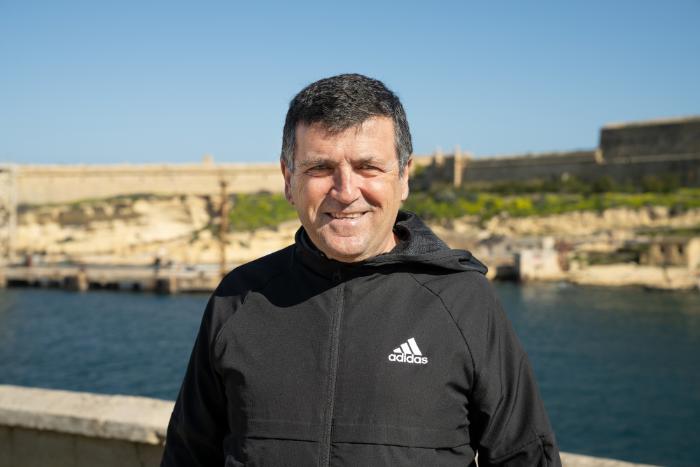
Oral history of the Malta Dockyard: Brian Galea
Interviewee
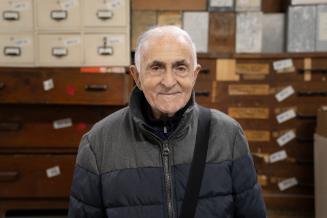
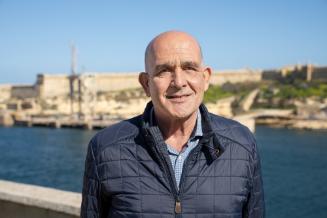
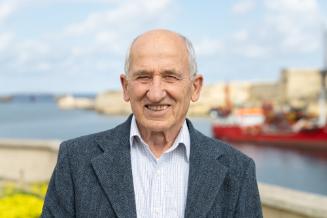
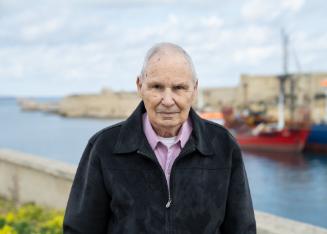
Brian Galea
Maltese, born 1962
Interviewed by
Joe Meli
Maltese, born 1953
Date4 November 2021
Classification(s)
Object TypeOral history
LanguageMaltese
Extent1 digital audio recording (WAV)
Registration NumberMMM.AV0085
DescriptionThis recorded interview was made as part of the Malta Dockyard Oral History project by the Digitisation Unit, Heritage Malta, under the direction of Joe Meli. Brian Galea entered the yard in 1980 and following the completion of his apprenticeship, he joined the shipwrights afloat section promoted gradually to shipwright liner, foreman and eventually leading the shipwrights’ department until finally resigning during the process of closing-down in 2008, as the Hull manager.Transcript / Summary
(This summary is a work in progress. Timings are approximate.)
Special CollectionEducation-Apprenticeship process
(00:30) In the 1980s, there was a call for applications to join the Drydocks, Shipbuilding, Air Malta, TeleMalta, and EneMalta and he sat for the exam to join the Drydocks. He states that about 1,600 students applied. Then they chose where to go depending on their order of merit in the exam. Brian passed the examination and chose to join the dockyard and on 8th September 1980 he began his apprenticeship.
(02:15) When he started his apprenticeship period, they were taken by an instructor on introductory visits around the yard to familiarise themselves with the various work sections. Then they were divided in groups of 12 apprentices and started their training in the training centre, where they spent about three months on the main trades found in the drydocks, for example: welding, fabrication, electrical, pipework, smiths, etc.
After they finished all sections/trades during the first year, they were sent to the various workshops related to their trade and assigned to an instructor. In fact, he went to the boilershop, to the plate shop, and others. They always worked under the full supervision of their instructor. Then as they got more familiar with the work, they start doing some work on their own.
(05:15) Eventually they were grouped in pairs, and he started working with Joseph Camilleri and were sent to the new building section, where they worked on the Marsa Dock dock-gate.
(06:15) When they finished their apprenticeship, they had to do a practical test, which in their case was to fabricate a crate for oxygen bottles. After the test they were assigned to a chargeman, and he was paired with Ninu tas-Siggiewi, and started working with chargman Ganni Abdilla, who was very strict, but very good in his work.
(08:00) While he was still in apprenticeship period, the Red China Dock (No.6 Dock) was in its completion stage, and he remembers the opening ceremony where he was selected to act as an usher.
(08:30) After three years with his gang (guy), he was asked by his chargeman to be his ‘primalista’ (second in command) when he was absent and Brian accepted.
After sometime, there was a vacancy for liners and he applied and his application was accepted and he started on his new job. One of the major works that he was involved with as liner were the tankers Lampas and Lepeta in the late 1980s. These two tankers had major steel works in all tanks and they spent about 6 months working on them in total. Then, work started increasing rapidly, including the Robert E. Lee, the passenger ships of P&O, Vista Fjord, etc.
(12:15) About 1989, he applied and was successful for a foreman position. He remembers his first work as a foreman was on a hopper barge from HAM in No.1 dock. The work was extensive and involved work on the deck arrangement, alteration of steelworks, etc.
He then continued working on other projects, he remembers a small ship at the Bwejba (Boiler Wharf), which had a collision at the forward peak.
In 1995 he worked on the ship from Yugoslavia named the ‘Gablanika’ in No.5 dock, which had a bulbous bow damage. The owner’s superintendent asked them if they could complete the work in 16 days, and Brian replied back that they will try. He gives details of the procedure that they worked on and eventually they finished in 21 days. Even though they did not reach the requested time he asked for, he was satisfied with the yard’s performance.
(21:15) Galea also mentions the Western Monarch ships. The superintendent was a Maltese engineer living in Norway and awarded the yard major works on two of their ships.
Entering the dockyard-Trades (From approval to the departure of a vessel)
(22:45) After 2001, the ship ‘Ikdam’ was doing major conversion in No.6 dock and at the same time the US Naval ship ‘USS La Salle’ was in No.5 dock doing also major works.
During that period, he was still a foreman, and he was assigned on the ‘Ikdam’. The work was a big challenge as they had to do fabricate and install about 1,000 tons of steel, make major modifications to the forward part of the ship plus other work involving all the trades.
The work started around the year 2000, and the first thing they had to do was to cut off the bulbous bow and an arm is fitted at the bow, through which to pass all connections from the ship to the sea bottom. Brian goes into detail on the work involved including the high quality that the work required.
(37:30) Other work on the Ikdam was the fabrication of the flare tower at the Malta Shipbuilding in Marsa. Meantime on the vessel they were preparing the structural stiffening to take the flare tower. The fitting of the flare tower had to be very accurate and the work tolerance was very tight.
(49:15) Other work on the Ikdam was the fabrication of the production platforms, which were constructed of steel beams at the assembly hall, the boilershop and again the Malta Shipbuilding. Galea was given a programme to follow and he states that they were well prepared, as most of the work was fabricated at the workshops and their job was mainly fitting and welding on deck.
(51:30) After the work on the ‘Ikdam’, the drydocks was planning to organise a section for super yachts. In 2001/2002 he chose to go and work with the super yachts section, and was assigned to work on a yacht that was sometimes charted to a Formula 1 champion. This was in No.3 dock and required a lot of work.
(53:45) In the meantime, there was a call for application for the post of the Hull Departmental Manager. In 2003, he was promoted to the Shipwrights Departmental Manager. Again, it was another challenge, and his aim was to make sure of the cooperation between all the foremen and workers in his department, as well as with other departments.
(57:15) It was difficult for him to convince the chargemen and workers to wear safety equipment such as safety glasses and helmets. He even improved punctuality. After a year as departmental manager of shipwrights, he was promoted as deputy to Vince Pulis, who was Hull Manager.
(1:00:30) During that time, the Western Monarch returned back to the yard for other work. The ship had a lot of work and Galea used to make meetings with the other managers to co-ordinate the work. After about a year, Vince was shifted to work on the Vista Fjord, so Galea was left alone to take the full responsibility of the Hull Division.
Life after the Dockyard-Finding a new job
(1:07:15) He stopped working from the drydocks on 31st December 2008, when he received the letter that by the end of December his experience at the dockyard will come to an end.
Brian was already thinking what his next job would be after leaving the yard and with the help of a family member, he started doing work, on the same lines of his previous work at the Freeport.
He was already preparing for his new job, even before he was discharged from the drydocks. In fact, he worked at the dockyard in the morning and part time in the evening doing work at the freeport. He spent half of his bonus on tools and equipment and from 1st January 2009, he began working on his own and employed some workers with him and from that day up to 2020 he worked for 10 years working non-stop.
Malta Dockyard Oral History project
Dimensions1 hour 14 minutes 10 secondsProvenanceRecorded by Digitisation Unit, Heritage Malta.Public Access
Not on viewMuseumMalta Maritime Museum
Location
- Malta Maritime Museum, Reserve Collection