
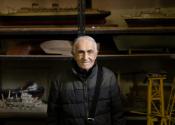
Oral history of the Malta Dockyard: Noel Galea
Interviewee
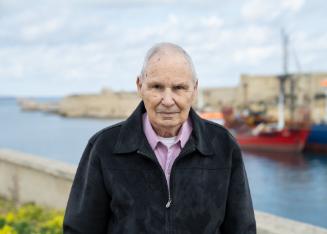
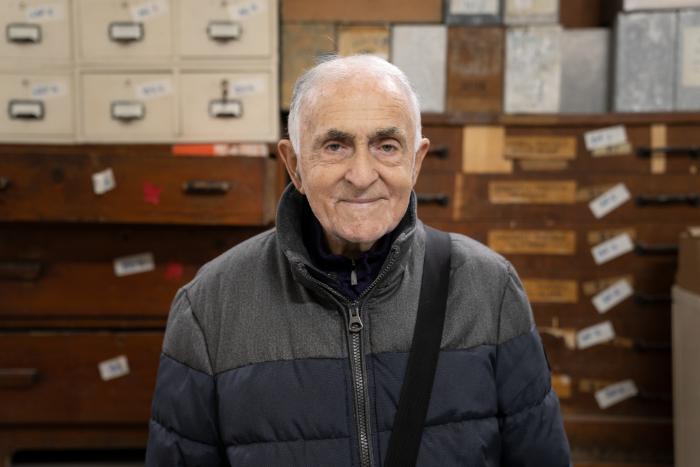
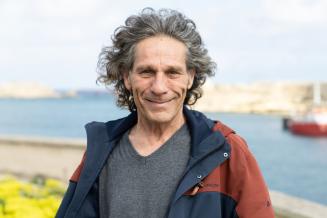
Noel Galea
Maltese, born 1936
Interviewed by
Joe Meli
Maltese, born 1953
Date2 March 2021
Classification(s)
Object TypeOral history
LanguageMaltese
Extent1 digital audio recording (WAV)
Registration NumberMMM.AV0029
DescriptionThis recorded interview was made as part of the Malta Dockyard Oral History project by the Digitisation Unit, Heritage Malta, under the direction of Joe Meli. Noel entered the yard in 1950 as a shipwright apprentice. On completion of his apprenticeship, he became a liner. When Bailey took over the yard from the Admiralty, the intention at that time was to introduce shipbuilding in Malta. He and his colleague were sent to a shipyard in Norway to learn prefabrication methods. He moved through the ranks up to Hull division manager and in 1990 he was assigned the position of Commercial manager up to his retirement in 1997.Transcript / Summary
(This summary is a work in progress. Timings are approximate.)
Special Collection(00:30) His family was living in Australia, and came back to Malta when in 1948. He went to school for around a year and then did the drydocks exam and entered the drydocks during the time of Admiralty. He chose the shipwright trade, as he loved ships in general, and did the six years apprenticeship.
(01:45) The first 2 years as an apprentice were done in the apprentice training centres where they gained general working knowledge about the different trades/skills of a shipwright in the first year and the 2nd year, the first six months were in the training centre working on metal work making tools and small jobs to learn how to use their logic, as well a hands-on practical work. In the second 6 months, they did woodwork, doing tools such as wood planes (cana; plural: cwani) and saws (serrieq; plural: sriraq). In the 3rd year, they worked on board with an assigned gang, which changed every three months, working on either wood or metal.
(03:15) In his 5th year, he also worked for around three months at Manoel Island working on small Admiralty vessels. He loved working there so when he became a shipwright in 1955, he went to work there again, at his request, where he spent 2 years. Afterward, he went back to the dockyard to work as a liner. At Manoel Island, he worked on small landing barges, passenger boats, and tug boats.
(04:30) As a liner he was allocated with Foreman Muscat.
(04:45) During the last one and a half year of the apprenticeship, they used to spend one year working in the drawing office for two hours in the evening (from 17:00 till 19:00). Then for the last 6 months, they worked full time in the drawing office-learning how to draw and read drawings. The drawing office at the time was near Ghajn Dwieli. Everyone had a draughtsman in charge of them.
Entering the dockyard-Swan Hunter / Bailey / changeovers
(06:30) In 1959, the British Government was reducing the facilities outside the UK and the decision was to reduce the Admiralty presence in Malta which affected the dockyard badly. Baileys who already had a shipyard in Wales came to take over the dockyard from the Admiralty. They were in Malta and managed the dockyard for about three years. Bailey’s intention at that time was to introduce shipbuilding in Malta.
For the mentioned reason, he and his colleague were sent to Norway for two and a half months where they particularly learned the prefabrication methods used in Norway. Pre-fabrication was not known in Malta. Though pre-fabrication was used to build new ships, it could also be adapted to commercial vessels shiprepair especially for large damage.
Education-Projects
(08:30) One of the big projects (at the time he was an assistant to the departmental manager) they had was on Esso Peru, which had double bottom damage from the skeg to more than half of the length of the vessel. The flat and the turn of bilge were all damaged which was repaired using prefabrication-done either on the dock floor or in the shop, using a crane and a trailer to move it accordingly.
Education-Projects
(09:30) When it came to commercial vessels, the amount of work increased. It is worth remembering that at the time of the Admiralty, the completion of the work was not as demanding as with commercial vessels, the work had to be done in a short period of time. For example, the Esso Peru had to be done in 48 days, as that was the what agreed with the client.
(11:00) During the Bailey take-over, some of the workers, which were near retirement were given a sum of money to retire. Whereas the younger ones stayed with Bailey and were organised in gangs, etc.
(11:45) Modifications were carried out to No.4 and No.5 docks due to the different shape of commercial vessels as compared to Naval ships, which did not have the width and depth as found on cargo ships.
The dock gate of No.4 dock was a floating gate, and this was changed with a new one with a different design. No.6 dock (also referred to as the China Dock-as the contractor was from China) was constructed to take the larger ships. As ships, especially tankers, were getting larger. The No.6 dock require additional yard equipment, such as staging.
Safety-Health and Safety procedures
(13:45) The work on the tankers was the most dangerous work they did due to the flammable substance they hold. They require a lot of cleaning and gas-testing before the hot works permits are issued.
Even though, there have been eventualities where accident happened. To do the cleaning they would remove a piece of the steel plate from the bottom (like a manhole), where there was the damage; sometimes, in the case of presence of gas, they would also drill holes for testing, and the chemist would then certify the compartment gas-free and would then go ahead to continue opening it for further cleaning.
(16:00) Passenger liners: Vistafjord which used to come to the dockyard every 2 years for a refit. Other vessels coming from companied such as P&O, Cunard, Royal Viking and others.
(17:15) The Vistafjord: works on the engine, lining on the cabins, and new aluminium structure for the deluxe cabins.
(18:30) They kept in contact with the shipyard agents to bring new work to the dockyard-in fact, he used to keep the phone next to his bed due to work with Australian and American clients, that called in the night due to different time zones.
Trade Union-Strikes
(20:00) He recalls a vessel that came in during the long strike they had, in 1971, docked in No.4 dock. The owners wanted to take the vessel out of the yard. However, the ship still had the shaft dismantled and the access plate open. Somehow or another, the crew of the ship managed to reinstall the shaft, but then they needed the re-fit plate as well. So, they were asked by the yard higher management to try to put back the access plate, so they started to do the work all by themselves without the knowledge of the Union. However, the Union stewards go to know this and they stopped them. Eventually, the ship managed to complete the work on the plate. The ship was taken out of the dock in secrecy and was towed away from the yard.
(23:00) On the Esso Peru, they added to it another section to lengthen the ship. They fitted doubler plates on the bottom for strength and riveted in place. Welding at that time was still not considered as a substitute to riveting, however this changed with time and welding took over riveting completely.
(24:15) Eventually he took over the hull division and then the last 7 years before he retired, they reallocated him as Commercial manager.
(25:00) There was a bit of a rivalry between one division and another, but this was minor. The managers still managed to get along well and the work was still done appropriately.
Looking back-Reflections
(25:45) It’s been 24 years since he retired from the dockyard but he still recalls the memories of working there and he does not regret working there, that if he had to be born again, he would go to work in the dockyard again.
Malta Dockyard Oral History project
Dimensions26 minutes 42 secondsProvenanceRecorded by Digitisation Unit, Heritage Malta.Online Collections
Public Access
Not on viewMuseumMalta Maritime Museum
Location
- Malta Maritime Museum, Reserve Collection
EEA9077-162
May - June 1983
Photography