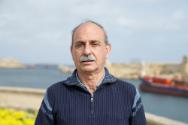
Oral history of the Malta Dockyard: Oreste Bottiglieri
Interviewee
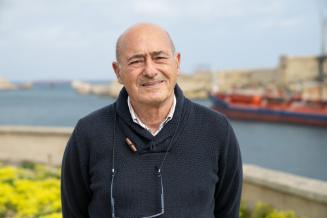
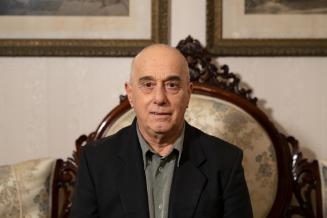
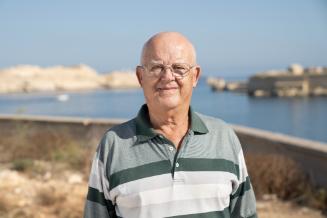
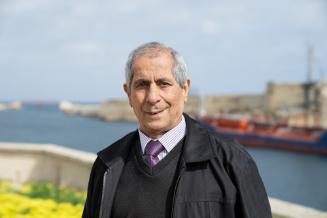
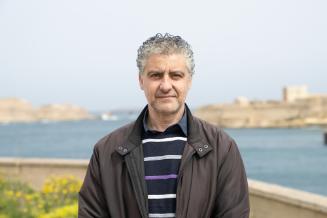
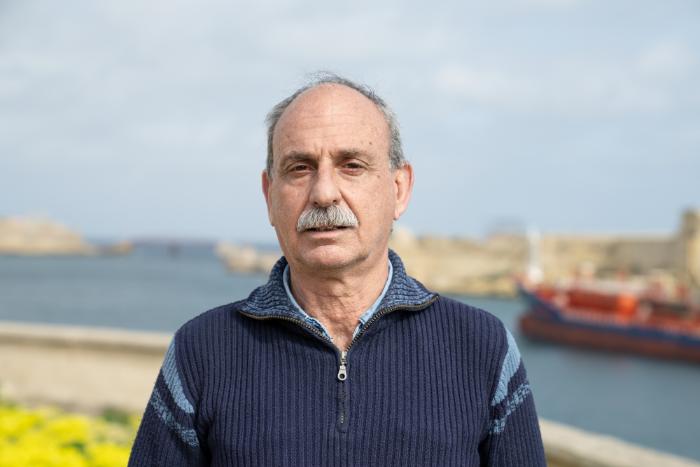
Oreste Bottiglieri
Maltese, born 1956
Interviewed by
Joe Meli
Maltese, born 1953
Date12 October 2021
Classification(s)
Object TypeOral history
LanguageMaltese
Extent1 digital audio recording (WAV)
Registration NumberMMM.AV0081
DescriptionThis recorded interview was made as part of the Malta Dockyard Oral History project by the Digitisation Unit, Heritage Malta, under the direction of Joe Meli. Oreste Bottiglieri entered the yard as a patternmaker apprentice in 1972. Gradually he shifted to steelwork at the Boilershop as a steelworker, then as a checker and finally he was promoted to foreman until the last day of the shipyards in 2010 when the yard closed down.Transcript / Summary
(This summary is a work in progress. Timings are approximate.)
Special Collection(00:30) He entered the dockyard in 1972 and started as an apprentice. He was encouraged to join the dockyard because his friend was going to apply to join the dockyard. He mentions that during that year only 60 were chosen and he positioned in the last places, somewhere around 55th place. During the first year he experienced all the main trades and at the same time they attended school. He then had two instructors, Saver Aquilina and Zuzu Gauci. He finished his apprenticeship in 1976 and remained a patternmaker until 1980. However, he was in the part of the Works committee, and since the trade of the patternmaker was reducing in importance, the Shipyard Council suggested that the patternmakers should change their trade and move to the boilershop as there was quite a lot of work.
Education-Interesting training and skills
(08:30) They went to the boilershop for a period of about three months and he was part of the team that was doing the cladding of the exhaust system for the Marsa power station. When the three months passed, it was time to return to the boathouse. At that point, Oreste realised that he liked the job at the boilershop and he applied to remain there; His application was accepted. George, who was a checker at that time and he was promoted to a foreman. He then asked Oreste to become a checker and spent from 1995 until 2008 in that position assisting the foreman. In 2008 he became a foreman at the boilershop up to 2010, when the yard closed down.
(11:30) He participated in a lot of work including the freeport cranes, the accommodation structures of the Gozo Channel Ships and other various projects.
Looking back-Relationships formed
(13:15) He appreciated the friendships he made at the drydocks and the cooperation that there was among workers and the different sections. For example, he mentions that they used to assist and vice-versa other workshops that for some reason required urgent material to continue their work. He used to go out of his way to assist them. He can say that this was totally different from working with a private company where this companionship did not exist.
Education-Interesting training and skills
(14:30) During the time he was a patternmaker, one of the main works was the re-wooding od the stern tube bushes. It was hard but interesting at the same time. In fact, he states that the process of it was amazing and very interesting. As patterns, they did patterns for valves, impellers, bushes, etc. He remembers when they once made a pattern for an engine block for the car of Archbishop Gonzi. Bottiglieri was still an apprentice at that time, but he remembers that Saver Aquilina was the patternmaker that made the pattern.
Education-Interesting training and skills
(16:30) They even did the lamp-posts of that at Auberge De Castille and other locations in Malta, the letters of the Freedom Day monument. They were also involved in other interesting work, which was not really part of the patternmaker’s trade, such as the ceiling beams at the Mediterranean Conference centre. Pattern work declined drastically as new machinery was being introduced around the world.
Entering the dockyard-Swan Hunter / Bailey / changeovers
(20:00) The boathouse also had an elected works committee and their aim was mainly the health and safety at the workplace. As well as how they can improve the efficiency and the work practices. They also gave feed-back on promotions. He cannot say that they had any power to make decisions, however they made proposals.
(22:30) Major work he remembers working on were, the power station of Marsa, they did all the exhaust and cladding. The Russian timber carriers and the Gozo Channel ferries. Small projects that he was involved with was a structural platform at Tattingers and another platform at the Zabbar Sanctuary Museum. They even constructed a bridge at Marsa, etc. In his opinion, the work on the Gozo ferries was the major project, where he gained a lot of experience.
Life after the Dockyard-Finding a new job
(25:00) They knew that the drydocks was closing down and every two weeks they were being reduced in number. This created a lot of tension on the individuals, when every two weeks they were advised to either to continue working or not to come to work on Monday.
When he left the yard, it was difficult to come in terms with the fact that he was registering for work with the labour office. He decided that he had to find some work outside Malta.
During his last year, the yard had two ships which engaged the company Harris Pye as their contractor. He was looking for supervisors, Oreste decided to join, so he applied. But then he had two opportunities for a job, however out of the blue, he was phoned by a local company Bezzina, who proposed him a job. However, although he worked well with this company and at the end, he still cannot compare it with the experience he gained at the drydocks.
(33:00) While working at the drydocks he was involved in two incidents. Once they were working on a gas cargo ship. The work was renewal of the insulation on the cargo tank just above the double-bottom. There was a fire on the ship while they were working, however the fire was not where they were working, but still there was some panic.
The other incident was when once he was at the boilershop working in the steel yard and while lifting a bunch of steel angles with the dock side crane, the wire broke and the load fell down on them, luckily nobody got hurt.
(37:15) The first time he worked on a cargo ship, he had to go 8 storeys down a vertical ladder and then climb up on a scaffolding to change the angles under the deck. Unfortunately, the trades that were in the shipyard are practically dying which is a pity because looking back the apprenticeship, this is what formed us both technically and in character.
Malta Dockyard Oral History project
Dimensions42 minutes 08 secondsProvenanceRecorded by Digitisation Unit, Heritage Malta.Online Collections
Public Access
Not on viewMuseumMalta Maritime Museum
Location
- Malta Maritime Museum, Reserve Collection