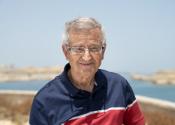
Oral history of the Malta Dockyard: Manoel Formosa
Interviewee
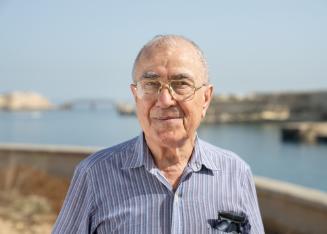
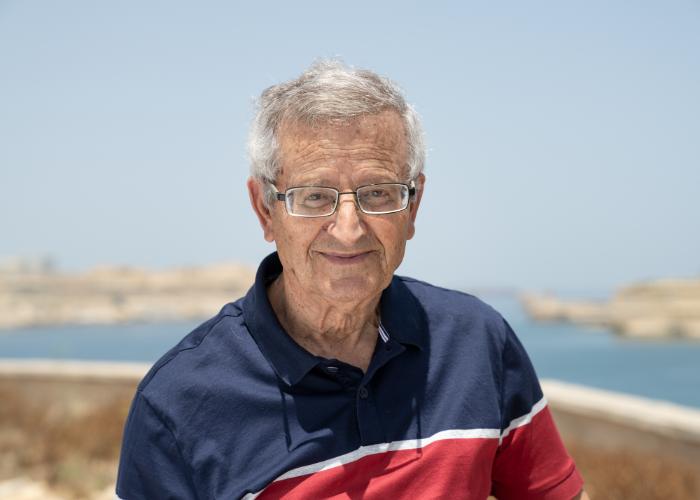
Manoel Formosa
Maltese, born 1941
Interviewed by
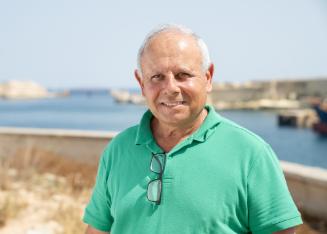
Joe Meli
Maltese, born 1953
Date28 June 2022
Classification(s)
Object TypeOral history
LanguageMaltese
Extent1 digital audio recording (WAV)
Registration NumberMMM.AV0112
DescriptionThis recorded interview was made as part of the Malta Dockyard Oral History project by the Digitisation Unit, Heritage Malta, under the direction of Joe Meli. Manwel entered the yard as engine fitter apprentice in 1957 during the Admiralty time, when the employees totalled around 12,000. During his apprenticeship, he continued his studies in engineering and was allocated to the drawing office. His was then allocated to the Estimating Office where he was promoted at a young age to leading estimator. He then applied for a position of shipmanager moving up to senior shiprepair manager and eventually took up the position of Commercial manager and Deputy General manager up to his retirement in 1995. Transcript / Summary
(This summary is a work in progress. Timings are approximate.)
(01:14:00) In 1990, he was offered the post of Deputy General Manager on the Finance side. Unfortunately, after 3 years he had a heart attack, and the medical professor recommended him to retire as the job he was in was too stressful.
Special Collection(00:30) Before joining the dockyard. He was at the De La Salle. He sat for two examinations. One for the dockyard and then for the Government. He passed first for the Government and was allocated to the water works department. He then received the dockyard examination result and decide to join the dockyard as Engine fitter in 1957 when the shipyard employed about 12,000 workers.
(05:15) His first two years were in the training centre near the Loco Shed. The training lessons were all very in details. They used to have all types of training and teaching lessons. On completion of the two years, they used to be given a project, He remembers that he had to do a bearing extractor.
(09:15) He remembers that during that time the plate shop also served as a machine shop for the ship-fitters, who worked on machinery on the deck and the rudder. He spent some time working on submarines at the No.1 dock. The instructors were very experienced, and they used to pass on their experience to those apprentices who showed interest.
(12:45) He mentions that they also attended the technical college for theory studies. They used to sign an indenture, which was a contract signed by the dockyard and the parent of the apprentice. Since his father did not know how to write, so a certain Mr Mifsud signed on his father’s behalf. During the Admiralty years the maximum post that a worker could reach was that of a chargeman.
(16:30) When Bailey took over the yard, the system changed and a new education department who started organising an education system. He remembers that the first MCAST was on the site on the Dockyard school in Senglea. He studied various courses and then was allocated to the drawing office. He was assigned to Mr. Baird who was a work study engineer and they used to go on the job to inspect the work being done and see what can be improved through new equipment, etc. He was then allocated the job of making a sort of audit of all the machinery that existed in the dockyard. He started from the boiler shop, and he used to notice that some of the equipment was being loaded on a ship.
(22:45) In 1963, Swan Hunter replaced Bailey. A new education officer arrived and he started to ear-mark apprentices for further training. Manwel, was moved from the drawing office to the estimating office, where he was allocated to the Industrial section. This section took care of industrial projects such as factories that were being built in Malta. He then had an opportunity and moved to the marine estimating section. He used to make a lot of research from the files of other estimates. In 1966, he was promoted to leading estimator whose work also included checking other trades such as steelwork. Being young, he was not well accepted by the older people. He had the initiative to look new methods in estimating. Eventually he got around this problem.
(32:00) In 1970, he applied to join the shiprepair managers. The interviewers noticed his young age; however, they eventually chose him to become a shiprepair managers. At that time, there were still foreign managers who did not look at them in a good way. He recounts some of the difficulties he used to have during his experience as shiprepair manager. In 1976 he moved to Senior Shiprepair manager, with Mr. Freddy Cachia. They used to work very well together. He was also responsible for the training of various Trainee shiprepair managers. He spent in this position up to 1980.
(51:15) In 1980, he was appointed as Commercial Manger and worked very well with the persons already there, namely Joe Darmanin and Karmenu Falzon. The position of commercial manager had a lot of responsibility. Manwel describes in detail various episodes he was involved with, such as negotiations with Owners, mentioning specifically Russian companies. He also mentions some incidents with other shipyards in Germany about the work with the Russians.
(01:04:15) He also mentions the work involved in getting the work, sometimes requiring personal contacts, that shows the trust that is created between the dockyard and its clients. He mentioned that one of the main requirements for a commercial manager was to know in detail the facilities the dockyard can offer. He recalls the time when we were dealing for possible work with Cuba, that involved also political decisions.
Malta Dockyard Oral History project
Dimensions1 hour 30 minutes 33 secondsProvenanceRecorded by Digitisation Unit, Heritage Malta.Online Collections
Public Access
Not on viewMuseumMalta Maritime Museum
Location
- Malta Maritime Museum, Reserve Collection