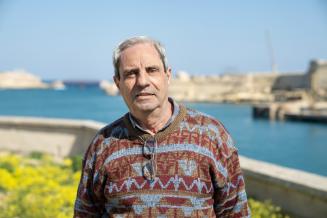
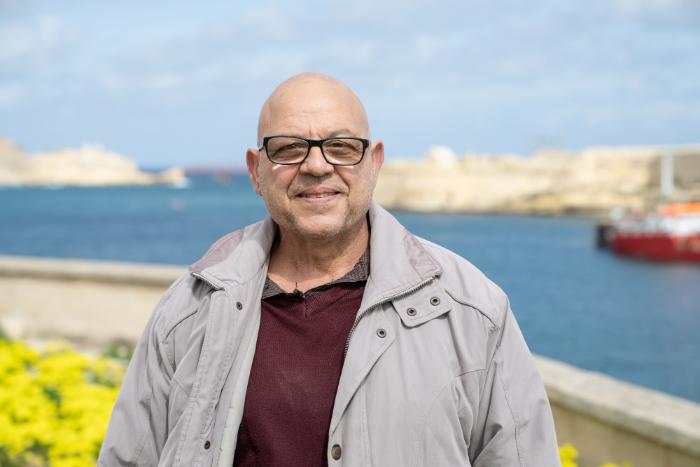
Oral history of the Malta Dockyard: Victor Seguna
Interviewee
Victor Seguna
Maltese, born 1953
Interviewed by
Joe Meli
Maltese, born 1953
Date27 July 2021
Classification(s)
Object TypeOral history
LanguageMaltese
Extent1 digital audio recording (WAV)
Registration NumberMMM.AV0064
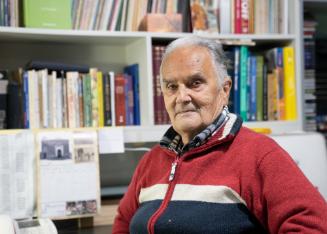
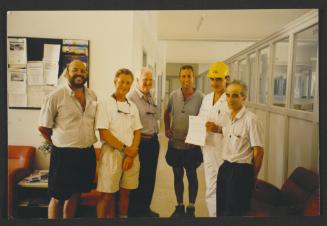
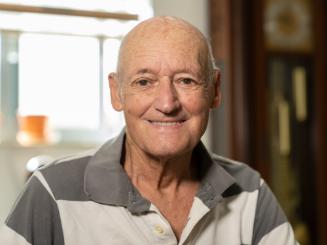
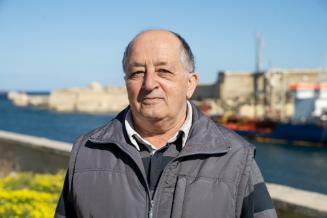
DescriptionThis recorded interview was made as part of the Malta Dockyard Oral History project by the Digitisation Unit, Heritage Malta, under the direction of Joe Meli. Victor Seguna entered the yard as a Yacht and Boat Builder apprentice in 1969 and was allocated to Manoel Island Yacht Yard. Following years as a tradesman he moved up the ranks and eventually was promoted to general manager of the Yacht Yard, until his resignation in 2002.Transcript / Summary
(This summary is a work in progress. Timings are approximate.)
Special Collection(00:30) He joined the dockyard as an apprentice in 1969. He was allocated to a group of ‘yacht and boat builder’ apprentices specifically to eventually work at the Manoel Island Yacht Yard. This was a branch of the Malta Drydocks, specifically to do with yachting and located at Manoel Island in Gzira. Its history followed the Dockyard history starting with Admiralty naval ships, then turned commercial with Bailey following the same ownership/management systems of the Dockyard, specialised in small / leisure ships.
(01:45) By the time he joined in 1969, the yachting section was still considered as new. They still were maintaining naval boats that were still in Malta. Some of which were converted to fishing vessels.
(02:30) Seguna mentions names of his colleagues during his apprenticeship, Joe Abdilla, Frans Ciantar, Frans Micallef, John Zammit, Capello, Charlie Caruana, Charlie Xuereb, etc. They joined together and were given special training specifically on yachts.
Education-Employment pathways / local and foreign training opportunities
(04:00) When he joined the dockyard, he did his training centre period of one year and then he was transferred to Manoel Island to take training on the job. He spent 16 years as a tradesman. Then he was given the opportunity to become a yacht repair manager. During that time, at Manoel Island they were having issues with finding managers, and he was offered the opportunity to become a general manager, responsible from Manoel Island. He describes it as a difficult experience.
(05:45) He sat for the ‘city and guilds’ on yachts and small boats. At the same time continuing his training in shipbuilding and shiprepair. He had to do both theoretical and practical examinations. They learned how to make on wood pole joints, wooden oars and rudders, etc. Then they were also introduced to repairs on non-wooden boats. In 1970s yachts were being introduced in the yard. They had a lot of interesting projects at that time, including yacht refurbishment.
Education-Interesting training and skills
(09:00) Victor remembers when they started building fibre glass boats. There was a model called Calypso, which was made of glass-fibre. Then there was the Medina, Melita and Mistra, which was the biggest model of about 28 feet. He mentions that there were seven slip ways at Manoel Island yard and in late 1970s they organised a storage area where owners kept their boats onshore.
Education-Projects
(11:15) They did several major projects, including refits of super yachts. One project was the Yacht Atlantide. The owner bought it from the marina, and it was an ex-navy boat and wanted to transform it into a yacht. During the work they were finding a lot of additional work due to the condition of the hull. So, they started to renew the steel and practically changed all the steel hull except the keel with the assistance of the main yard steel workers.
(15:15) At Manoel Island they also had a contract with the Libyan authorities to repair their fleet of smaller navy ships. This contract commitment was stopped with the change of the Government’s policy, to stop any military related work from Malta.
(15:45) Seguna states Manoel Island catered for practically all trades and were self-contained. People were skilled, there was the electrical department, machinery shop, engineering, shipwright, etc. He even had the opportunity to do a business management course sponsored by the dockyard, when he was already a manager.
Education-Projects
(18:00) Another interesting project was the outfit of hydrofoils. They outfitted 6 of them at Manoel Island. The hull was built in Marsaxlokk by the Rodriguez company and then transferred to Manoel Island for the outfitting work. He started working on the hydrofoils when he was still a tradesman, then during the second project, he took over as the project manager. It was completely made in Malta, and they even trained people for this purpose and bought special equipment.
(22:00) They even repaired lifeboats according to their needs. Mainly these boats came from the passenger ships coming from the main dockyard. The environment was different from that of the dockyard, in fact, he states that workers at the Dockyard were fully geared. He states that the worst three months of his life was when he did management trainee and had four ships at the dockyard under his responsibility. The mentality was different from working on a ship to working on a yacht.
(23:45) The yacht yard also carried out textile work there, such as flags, etc. This department was originally established at the dockyard but was then transferred to Manoel Island. He remembers the expansion of the yacht storage space in the 1970s. Victor claims that by time, Manoel Island doubled in size - the outskirt of the fortification.
(26:45) There were basically two types of work in the yard, either on the slipway or storage. Those that were on storage, by time began using hoist (known as travel lifts), which was a sort of mobile crane that lifted boats or small ships using straps. Some of these can now be seen in Marsaxlokk and at the dockyard today, and the biggest one in Malta has a capacity of 700 tons. Then, on the other hand, the slipways have rails going down in to the sea with moving carriages with dismantable beams. The floating boat is positioned on the carriages and pulled on to the slipway and secured by wedges. Apart from the wedges to secure the boat, they also used crutches, depending on the shape of the hull.
Safety-Accidents
(30:45) All yachts and boats that entered had to be insured against possible accidents. In fact, he mentions that there were instances were yachts toppled due to bad weather. Other accidents were caused by fire.
An interesting story was when once they had a yacht, during the Israelite and Palestinians conflict, and during the slipping operation, they noticed that it had explosives attached to the hull. It took some time to remove these underwater.
(32:45) They never fabricated aluminium poles at Manoel Island, and these were always imported. But they used to produce wooden poles, using silver spruce.
(33:45) Seguna mentions the Comino boats, which were transport ships. These were known as MFV’s. At that time, they were no longer in use, so they transformed them either to fishing vessels or as tourist boats.
(36:45) The yacht yard was considered as a department of the main dockyard. For example, they used the purchasing department of the main yard. In fact, for budgeting he used to go at the main dockyard. Victor states that the storage area used to be full with yachts and boats, and in fact, it was quite a problem for them when the boat owners requested them to return their boat into the sea.
The planning of the slipways allocations was one of their main planning tasks. The “Virtu” Catamaran used to occupy the biggest slipway. On average they held about 150 boats on the hard at one time. Then according to the work load, they used to get workers from the dockyard to help them. He makes it clear that the peak season of work was during winter, because during summertime work used to calm down. It was more profitable during the winter period.
Looking back-Reflections
(41:45) He resigned in 2002, when he took the voluntary redundancy scheme. At one time when the top management was discussing the redundancy personnel in his department, however the final decision was to do a voluntary redundancy scheme to every yard worker. This ended in many managers leaving, and Seguna was finding himself isolated and in a very difficult situation, so he decided to leave too.
(43:45) The yard once had a refurbishment of a yacht of the ‘Princess Tanya’, and this was arrested in the yard. As a result of that problem, Victor states that they lost big projects afterwards.
(46:00) They attended various trade fairs and boat shows to look for work. With these experiences they even met foreign competitors. Marketing was crucially important for them, and they even had to go to other countries to prepare a quotation, etc.
(51:30) By this time the dockyard became politicised. The reason behind this according to Seguna is that casual workers started working at the dockyard and things began to change. He himself formed part of the works committee, but he did not always agree with certain mentality.
Malta Dockyard Oral History project
Dimensions55 minutes 19 secondsProvenanceRecorded by Digitisation Unit, Heritage Malta.Online Collections
Public Access
Not on viewMuseumMalta Maritime Museum
Location
- Malta Maritime Museum, Reserve Collection