Antonio Sciortino
Maltese, 1879 - 1947
BiographyAntonio Sciortino (Ħaż-Żebbuġ; 25 January 1879 – 10 August 1947) was a Maltese sculptor, widely regarded as the leading figure of 20th-century Maltese sculpture. Although he lived in Rome from 1900 to 1936, he remained closely tied to Malta, creating several public monuments there, with many of his bronzes later entering the Fine Arts Museum collection.
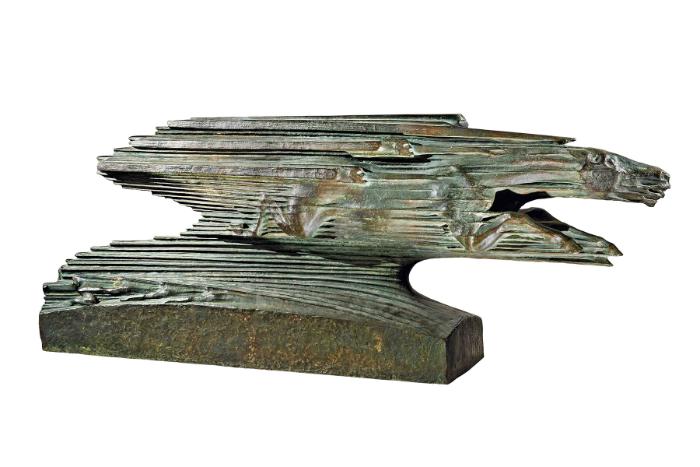
Influenced by Realism, Futurism, and the work of Auguste Rodin, Sciortino developed a distinctive style that gained international recognition, earning commissions in Russia, Brazil, and the United States. He served as director of the British Academy of Arts in Rome from 1911 to 1936, and from 1937 until his death, he worked as curator of the Malta Museum of Fine Arts. He spent his last years of life committed to saving Malta's cultural heritage from the ravages of the Second World War. He bequeathed his collection of plaster sculptures and drawings to the nation and they are today held at MUŻA. Among these is the plaster model for 'Speed'.
Influenced by Realism, Futurism, and the work of Auguste Rodin, Sciortino developed a distinctive style that gained international recognition, earning commissions in Russia, Brazil, and the United States. He served as director of the British Academy of Arts in Rome from 1911 to 1936, and from 1937 until his death, he worked as curator of the Malta Museum of Fine Arts. He spent his last years of life committed to saving Malta's cultural heritage from the ravages of the Second World War. He bequeathed his collection of plaster sculptures and drawings to the nation and they are today held at MUŻA. Among these is the plaster model for 'Speed'.
NationalityMaltese